The sea is a mysterious place to those of us who only get to visit it for as long as our canned air lasts. In our short dives we often spot things which are puzzling or unexplained. One of the things we’d speculated about on more than one occasion was why sea urchins wear hats.
It is quite a common phenomenon to see them with bits of kelp stuck to their tops – and quite firmly held in place too! – We’d guessed that they might be camouflage, but the truth is a little more prosaic…
Kelp and other seaweeds are not terribly palatable, even to grazing animals such as the urchins. Once the fronds have been broken up, however, then they start to die, and are colonised by bacteria and fungi. As the fronds decompose the amount of protein increases, and they actually become more nutritious. Also, the defensive chemicals (such as phenols) that seaweeds use to deter grazing while they are alive start to disperse, so they become less toxic. As a consequence, it pays an urchin to hold onto a stash of seaweed fragments as a light snack, or possibly even to mature them a little for better eating later.
The urchin’s hat is, therefore, its equivalent of a lunchbox!
Thanks to Little et al. The Biology of Rocky Shores 2nd Ed. publisher OUP, 2009, p105-106 for the enlightenment! Also thanks to Rob for the photo.
Posted: August 20th, 2009
Posted in Science
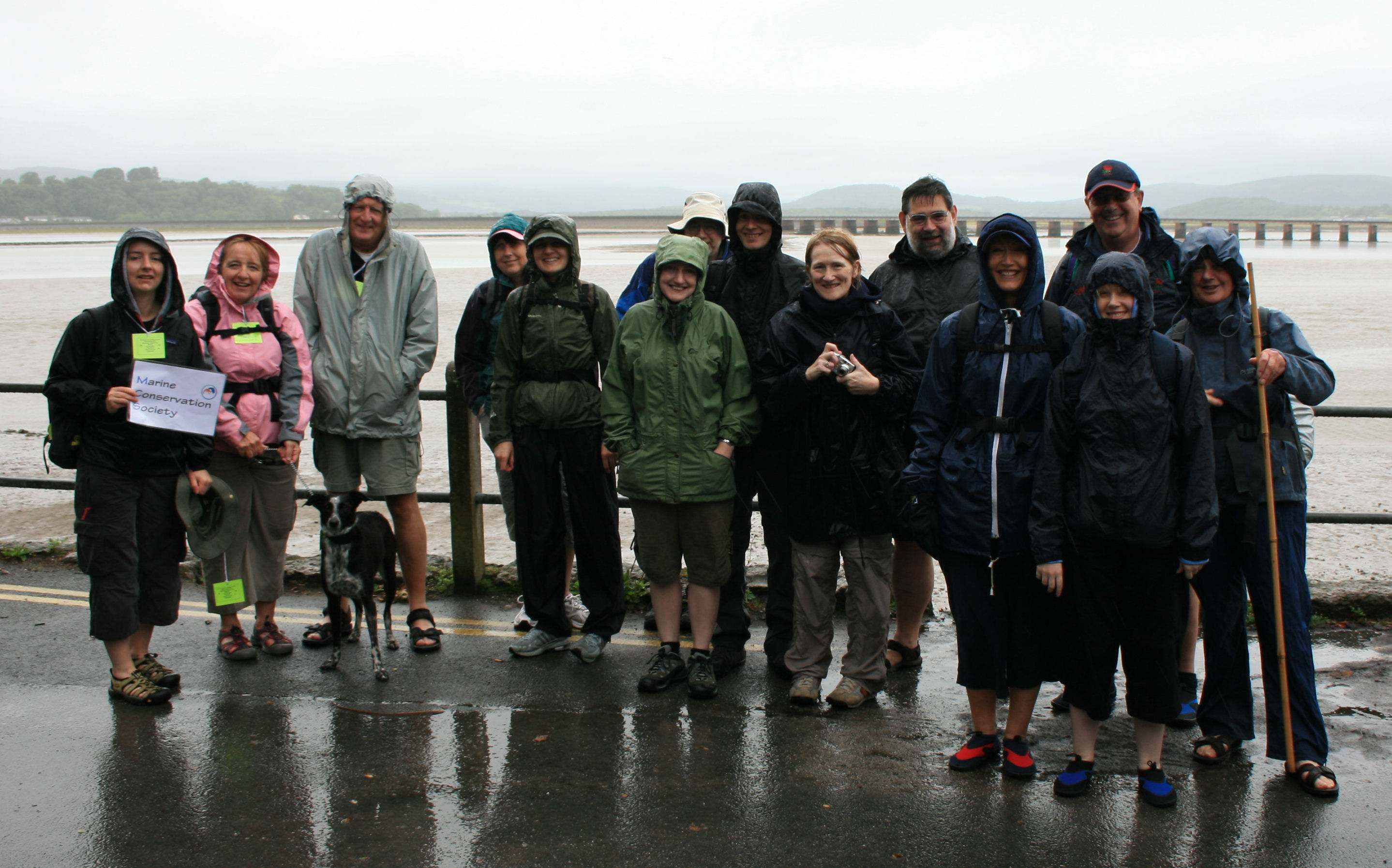
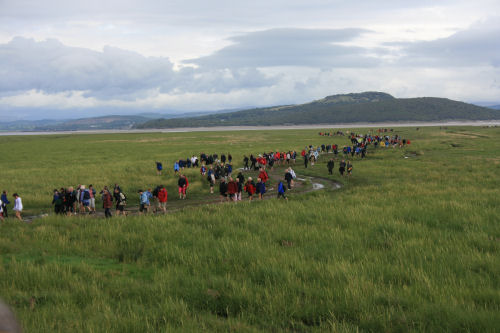
It was not the most promising of days – a small group of walkers for the MCS joined over 500 walkers for Galloway’s Society for the Blind in heavy rain at Arnside on Saturday morning (15th August 2009). The forecast was for brighter weather later – so we hoped that would be the worst of it, and looked forward to arriving at a sunny at Kents Bank!
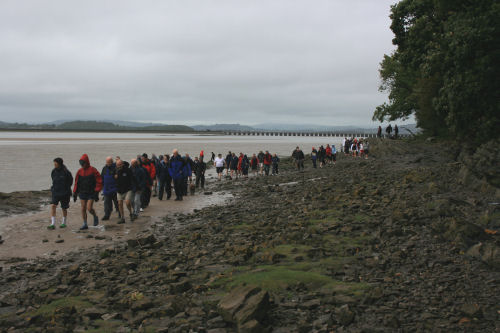
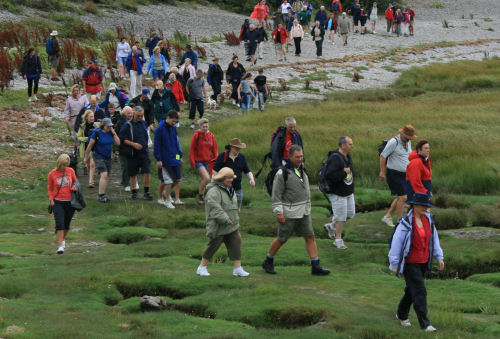
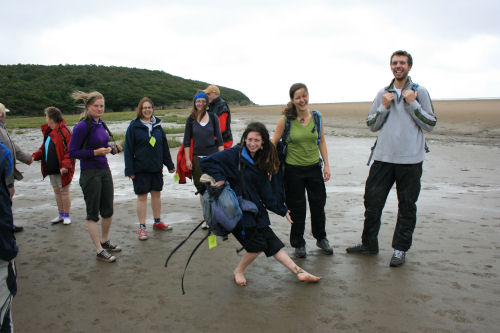
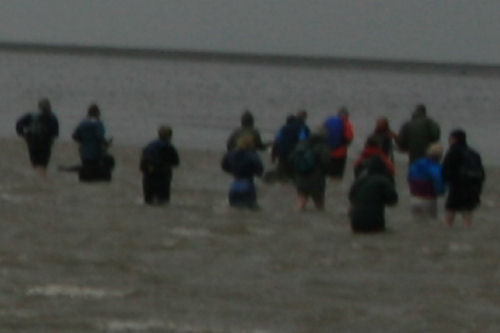
The great column of walkers set off on time, but soon snaked out over a mile. We gathered for a sandwich, and to let everyone catch up, just before walking out onto the sands proper at Far Arnside. Everyone had just about dried out from the earlier rain when we arrived at the Kent’s channel. Due to the numbers we crossed the channel in two waves – this prevents people following too closely after each other, which can result in the sand liquefying under the last people to cross. Those of us in the second wave watched with some trepidation as the waves broke over the waists of some of those crossing. Just as the second wave started to cross, the rain came down again, so we were soaked from the top and the bottom simultaneously! The water lever was deeper than anyone we spoke to could remember on a walk before, and rumour was that there had been some debate between the guides about turning back. In the event we all made it across safely – though soggily!
Finally, the better weather that had been promised arrived, and we were only a little damp by the time we reached Kents Bank, and finished drying in the sun in the Albion’s beer garden on our return to Arnside.
Thanks to everyone who took part in this years Cross Bay walk, all proceeds go to MCS’ Seas Fit For Life campaigns. Thanks also to Cedric Robinson, the Queen’s Guide, and to his very helpful team of assistants on the sand.
Posted: August 17th, 2009
Posted in Uncategorized
Studies on beach sands around Lake Michigan and Lake Superior in the USA have shown that beach sands are an important refuge for E. coli, and concentrations of the bacteria in the sand may be many times greater than that in the water, and persist for considerable periods of time. Scientists estimate that between 10 and 30 people per thousand are in danger of stomach upsets if they eat after playing in the sand without cleaning their hands – simply rinsing reduces the danger dramatically, though scrubbing with soap is best.
Frustratingly these studies refer to fresh water lakes, and it is not clear whether or not the same might be true of sea-water bathing beaches. Still, it is clearly advisable to follow your mother’s advice and always wash your hands before eating!
References
United States Geological Survey (2009, August 12). What Science Says About Beach Sand And Stomach Aches. ScienceDaily. Retrieved August 13, 2009.
American Chemical Society (2007, May 29). Beach Sand May Harbor Disease-causing E. Coli Bacteria. ScienceDaily. Retrieved August 13, 2009.
Posted: August 13th, 2009
Posted in Beach Clean