Blog updated!
For contributors, the MCS blog has just been updated, hope you like the changes to the edit facilities!
Barry
Posted: June 30th, 2009
Posted in Uncategorized

For contributors, the MCS blog has just been updated, hope you like the changes to the edit facilities!
Barry
Posted: June 30th, 2009
Posted in Uncategorized
Every year we get news of toxic algal blooms killing fish or making water unsafe to bathe in or drink from, but why do algae produce these toxic blooms? The easy answer is that they kill off predators, so the algae survive. Effectively, the toxin is there as a defence against predation. The problem with this theory is that micro-algae have to divert a lot of energy to produce toxins, so in most scenarios the toxic algae would be out-competed by species that did not go to the trouble!
Recently scientists have uncovered a more aggressive reason for toxin expression by algae, and one that gets round this problem. In the new theory the toxin is actually expressed against other algae in the water. Once killed, these dead phytoplankton leak nutrients back into the water that can be used to help fuel a toxic bloom.
Posted: June 30th, 2009
Posted in Science
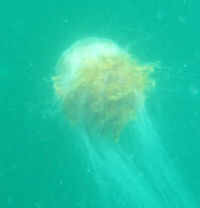
For some time there has been a growing worry about the numbers of jellyfish, with massive swarms being reported in Hawaii and the Gulf of Mexico in late 2008 (Science Daily article).
Jellyfish swarming is a natural event, but evidence is mounting that human activities are favouring these occurrences. Nutrients entering seawater from land run-off increases phytoplankton numbers, and over-fishing reduces the competition for this food. The consequence? – a Jellyfish swarm that can be several kilometres across!
Posted: June 10th, 2009
Posted in Science
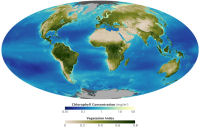
NASA’s Earth Observatory has just published a set of images showing average global primary production fro the period 1999 to 2008. The images show the most highly productive areas of land and ocean by colour (demonstrating again how productive the seas are off the UK). You can see how transient events – like an unusually wet year, can dramatically increase the vegetation levels over desert areas. As the covering notes say, however, it is not so clear why oceanic productivity varies so greatly from one year to the next. For more details and all of the images from this super gallery:
Barry
Posted: June 8th, 2009
Posted in Science
I too have to thank Gordon for doing most of the real work in organising the weekend. The drift through the narrows was one of those dives that gets imprinted in your memory, and I couldn’t believe the numbers of sea lemons on the stanchion when we dived on slack. The life and colours were brilliant. I hope those doing the photography ‘course’ found it useful and enjoyable, and that you’ve looked at your pictures and filled in that matrix 🙂
If anyone’s interested I’ve put some of my pictures from the weekend on the web at
http://www.zen102367.zen.co.uk/diving/lochcrerran09/crerran09.html
Lewis Bambury
Posted: June 1st, 2009
Posted in dive trips